Enterprise software architecture is often burdened by monolithic bloat and excessive disk-read bottlenecks. With modern high-concurrency runtime engines and clean bounded contexts, Laravel 11 powers mission-critical financial, ad-tech, and ERP infrastructure at unprecedented scale.
1. In-Memory Runtimes: Eliminating the 0ms Bootstrapping Bottleneck
Standard PHP-FPM boots framework files, configuration bindings, and service providers on every HTTP request. By deploying Laravel Octane with Swoole or FrankenPHP, the application instance remains continuously booted in RAM.
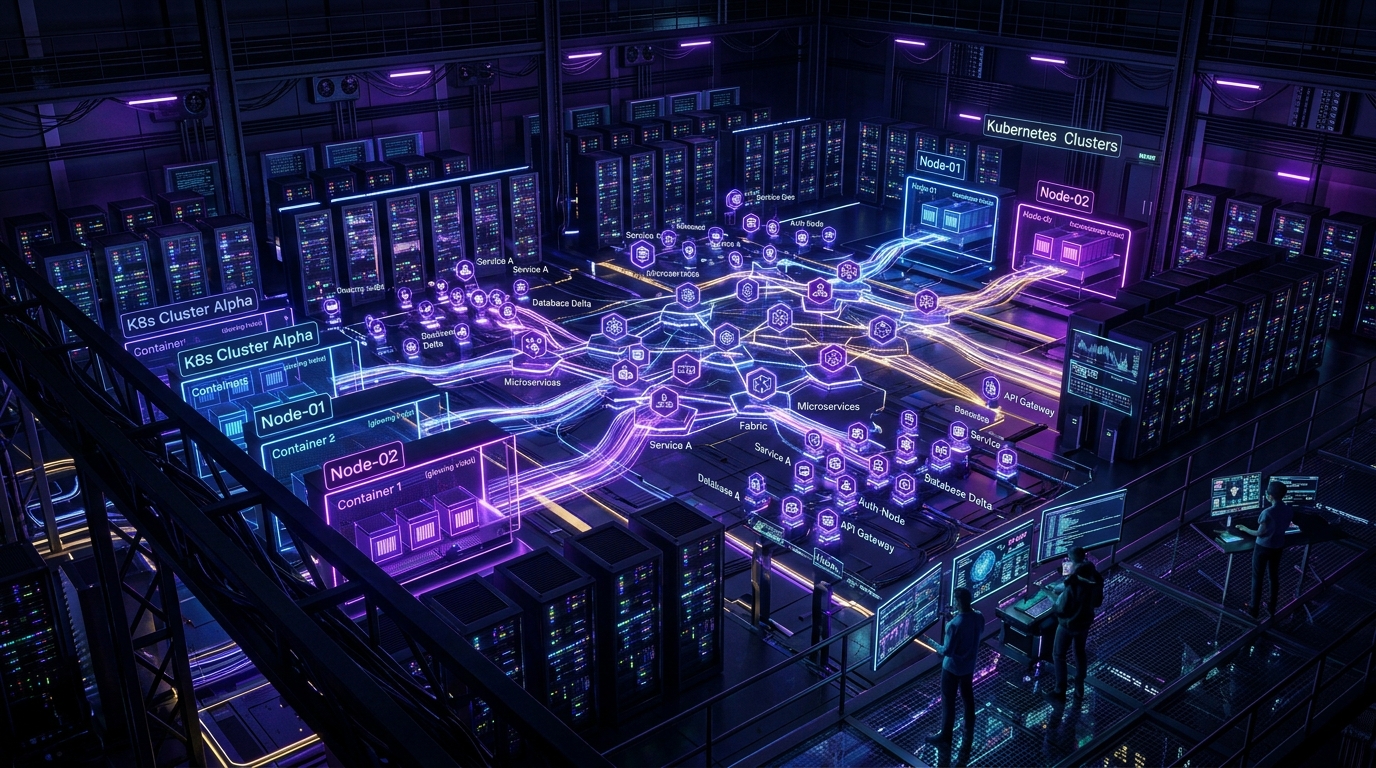
This drops base framework execution time to sub-millisecond territory, allowing a modest 4-node Kubernetes cluster to sustain 15,000+ non-blocking requests per second with effortless stability.
2. Domain-Driven Design (DDD) for Enterprise Maintainability
To avoid brittle monoliths as feature complexity compounds, we partition software modules into isolated, testable domain domains:
- Core Domain: Pure business entities, state transition machines, and domain invariant validators.
- Application Services: Command and Query Responsibility Segregation (CQRS) handlers and DTO transformations.
- Infrastructure Adapters: High-performance repositories, caching layers, and external third-party API clients.
3. Asynchronous Telemetry & Queue Scaling with Redis Horizon
Heavy operations—such as multi-currency ledger reconciliation, automated invoice PDF generation, or multi-platform pixel dispatch—are immediately offloaded to Redis-backed queues. Autoscaling worker pods via Kubernetes KEDA ensures instantaneous response times for end-users regardless of background load.